Who we are
A Criminal Justice program built in Arlington
We are the Criminal Justice program at the Grace Hopper Center, part of Arlington Public Schools in Arlington, Virginia.
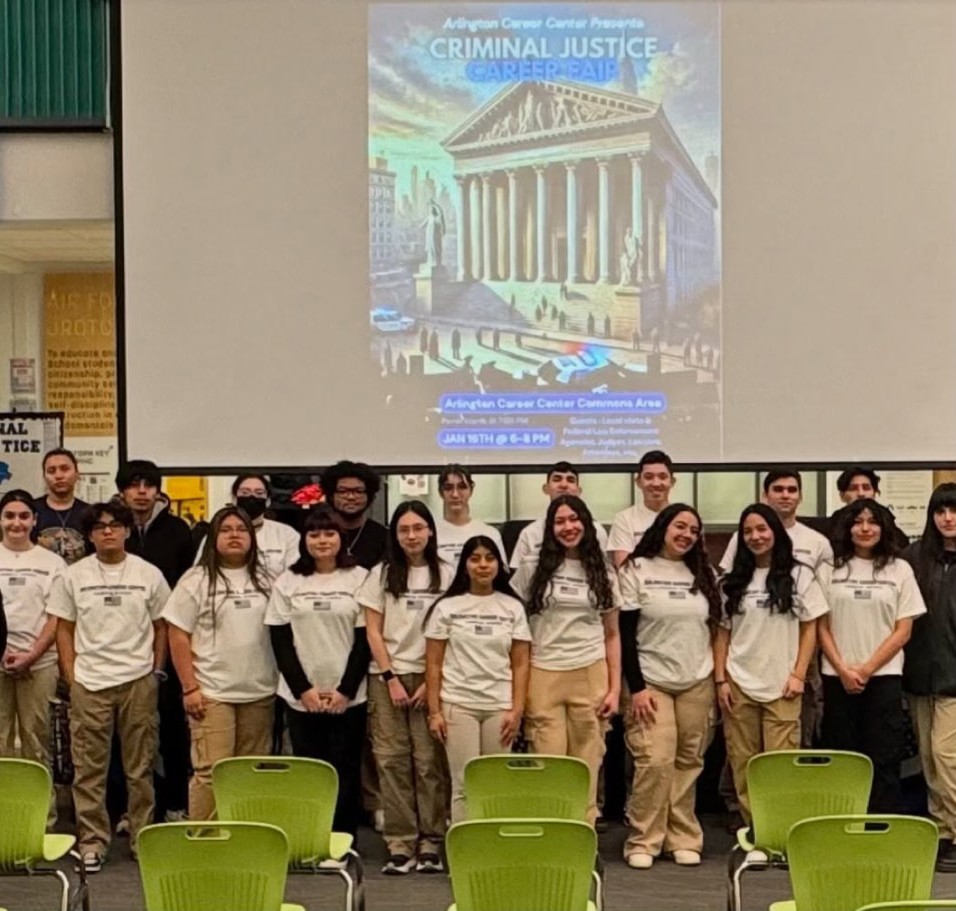
Our mission
We prepare Arlington high school students for careers in law enforcement, forensics, courts, corrections, and public safety. Students earn Virginia Department of Education competencies, build professional habits, and graduate with real, documented experience — not just a transcript line.
Every student is held to a standard of integrity, service, and respect. That standard is the job, long before it is a grade.
Our story
History of the Criminal Justice Program
Established 2024
The Criminal Justice Program was officially established in 2024, pioneered by Justin Rankin, a seasoned Mississippi law enforcement professional and educator. Rankin brought a unique blend of field experience and academic preparation to the program’s creation. His educational background including formal study in criminal justice, law enforcement training academies, and advanced professional development in investigations and public safety, provided the intellectual and practical foundation for the program’s design.
Rankin’s academic preparation strengthened his vision for a program that blended theory with hands‑on application. His education emphasized constitutional law, criminal procedure, crime scene operations, behavioral analysis, and emergency response areas that later became core pillars of the curriculum. Combined with his professional experience as a Deputy Sheriff, Investigator, School Resource Officer, and federal contractor, Rankin’s educational journey shaped a program built on rigor, ethics, and real‑world relevance.
Aligned with the district’s initiative to expand Career & Technical Education pathways, Rankin launched the Criminal Justice Program as a modern, skills‑based introduction to the justice system. From its founding year, the program distinguished itself through professionalism, applied learning, and community‑centered instruction. Students explored policing, investigations, constitutional literacy, and crime scene procedures, supported by Rankin’s academic grounding in evidence integrity and investigative methodology.
A defining feature of the program’s early growth was Rankin’s commitment to simulation‑based learning, rooted in his training and education. Under his direction, students conducted building safety walkthroughs, practiced evidence collection, performed crime scene documentation, engaged in mock investigations, and participated in emergency response drills. These experiences established the program as an immersive, hands‑on professional pipeline.
Rankin also expanded the program’s relevance by integrating First Aid, CPR, AED, and Stop the Bleed certification training reflecting his own emergency response education and commitment to public safety. His leadership strengthened partnerships with local agencies, enhanced dual enrollment opportunities, and laid the groundwork for internship pathways.
Since 2024, the Criminal Justice Program has grown into a recognized, respected, and mission‑driven CTE pathway, shaped by Rankin’s educational foundation, professional expertise, and dedication to student empowerment. What began as his pioneering effort has become a cornerstone program that prepares students to serve their communities with knowledge, skill, and integrity.